
Commercial · Dublin
Commercial electricians & fit-outs in Dublin
Fitting out an office, refitting a shop, or fitting out or upgrading a commercial or industrial unit? Tell us what you're planning, when you'll have access and whether the premises will be open during the work. We take commercial electrical enquiries across Dublin and surrounding areas, from business owners, facilities contacts, builders and fit-out contractors.
An enquiry is the first step in scoping the work. It doesn't commit you, or us, to a price, survey, start date or contract. Send what you have: a brief, drawings if they exist, or just the site and what needs doing.
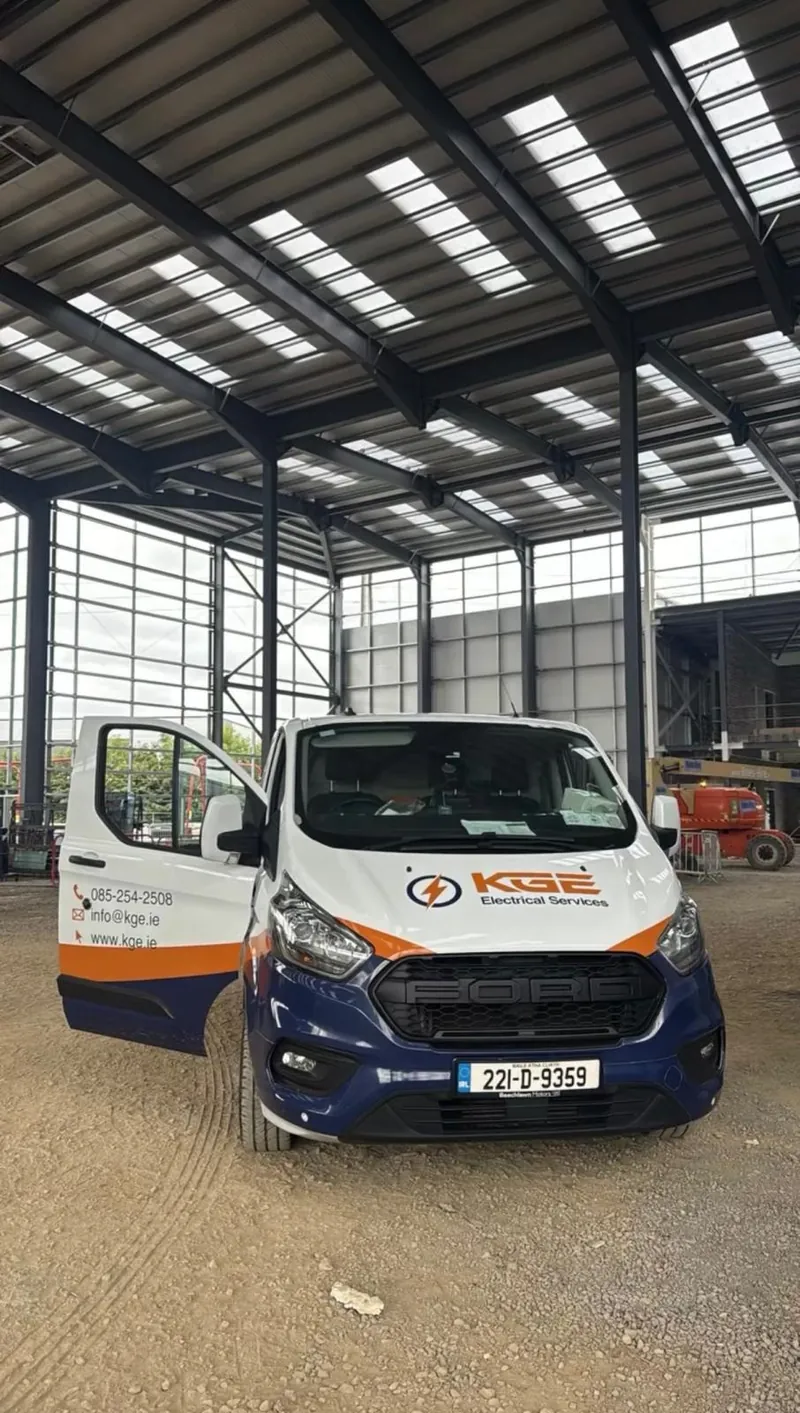 KGE Electrical Services
Fit-outs & refurbishments
Office, shop and commercial unit fit-outs
Most commercial enquiries start with a space being fitted out or changed: a new office, a shop refit, or a unit being adapted for a new tenant.
Offices
Lighting, power to desks and meeting rooms, and changes to existing circuits as the layout changes.
Shops and retail units
Lighting for the shop floor and displays, and power for tills and equipment, planned around the shopfitting programme.
Commercial units
A new fit-out for an empty unit, or power and lighting changes in one already in use, planned around what the unit will be used for.
Upgrades to existing premises
Lighting upgrades, additional electrical points and changes to existing circuits while the space stays in use.
Before quoting, we check the existing installation, the drawings or layout if there are any, and what the space needs to run. If the project also needs specialist systems, such as data cabling, fire detection or emergency lighting, tell us early so the scope is clear about who provides them. Industrial unit? See electrical fit-outs and upgrades for industrial units.
Industrial units
Electrical fit-outs and upgrades for industrial units
Fitting out a unit or changing how it's used? Tell us what the space will be used for, what power and lighting it needs, and when you can give us access. If part of the premises will stay in use, tell us which areas need to remain open and what needs to stay powered. We'll use that to discuss what we can quote and how the work could fit your programme.
How we plan work in premises that stay open is set out in working around a business that's still open. For ongoing support once the unit is running, see planned maintenance.
Access & disruption
Working around a business that's still open
An empty unit and a shop that's trading are very different jobs. The first thing we need to know is who will be in the building while the work happens.
Vacant premises
The space is empty, often with other trades working on site.
- Tell us
- When you get access, the ceiling installation date and other key dates, and who is managing the fit-out.
- We agree
- The order of work with the person running the project, so the electrical work fits the programme.
Occupied or trading premises
Staff, customers or tenants are still using the building.
- Tell us
- Shop trading or office hours, areas that must stay in use, equipment that can't lose power without notice, and any landlord approvals.
- We agree
- Timing, any power interruptions and whether the work can be phased, before dates are fixed. Not every job can be phased, and we'll tell you what's realistic for your site.
Let us know when the premises are occupied and which areas need to stay in use. We'll discuss access, possible power interruptions and how the electrical work fits into your programme before agreeing dates.
Planned maintenance
Planned electrical maintenance for your premises
For facilities contacts, landlords and business owners who want an electrician they can plan with, rather than calling someone new each time. Tell us:
- The premises
- The type of business and roughly how big the site is.
- Number of sites
- One premises, or several.
- Existing records
- Any previous inspection reports, test results or drawings.
- The support you need
- Routine checks, help with recurring faults, lighting repairs, or something else.
- Hours and access
- When the site operates, and when work can happen.
Your quote
What goes into a commercial quote
A clear quote depends on a clear brief. With or without drawings, these are the things that shape the price and the programme:
- Drawings or a layout
- A specification or drawings help most. If they're not ready, a marked-up plan or a walk-through is enough to start.
- Location and premises
- Where the site is, the type of business and the size of the space.
- Existing installation
- What's there now, its condition and any records.
- Points and quantities
- The number and type of lights, sockets and other electrical points.
- Scope boundaries
- What is in our scope, and what other trades or the client are providing, including fittings.
- Access and handover
- Working hours, site access, the programme, and the documents you need at the end.
How it works
From enquiry to handover
Enquiry and brief
The site, the premises type, what you need and your dates. Drawings if you have them.
Scope and access check
We confirm the scope and, where needed, look at the site and the existing installation.
Your quote
We talk through what's included, what isn't, and the assumptions behind the price.
Programme and works
Dates, working hours and any power interruptions agreed, then the work carried out.
Testing and documents
The agreed testing is done and the documents for the work are handed over.
If the scope changes
Changes happen on fit-outs. If the scope changes, we'll talk through the effect on price and timing with you.
Handover documents
Tell us which documents you need at handover. Under the Safe Electric scheme, work such as a new circuit must be certified by a Registered Electrical Contractor. A periodic inspection report, or records for specialist systems, are separate.
Customer reviews
What commercial customers say
- Industrial fit-out
Erik and his team have just finished a massive industrial fit out for my woodworking shop, and they were fantastic from start to finish. They're reliable, trustworthy, and take real pride in their work. …
Steve LuckGoogle review - Office rewire
Eric completely rewired our office building, updated everything safely and efficiently. Super clean install, on time, no mess.
Big upgrade in reliability and safety. Really pleased with the work, highly recommend eric & the lads at KGE Electrical Services!
Too turned TonyGoogle review - Scout hall
We had KGE recently do some major work on our Scout hall in Phibsboro. I found Erick to be very helpful in understanding our needs and explaining what the job would entail. We entrusted his crew with keys and access to our premises. …
Vincent CahillGoogle review
Quoted from our Google reviews (… marks a shortened review). Read more customer reviews
Commercial work across Dublin and surrounding areas
Looking for a commercial electrician in Dublin? We take commercial enquiries across Dublin and surrounding areas. Include the site area or Eircode and we'll confirm we can cover it. You can check any electrical contractor on the Safe Electric register (opens in a new tab).
Do you take on office and retail fit-outs?
Yes. Office, shop and unit fit-outs are the main commercial work we quote. Tell us the premises, the brief and your dates. If you're also thinking about planned maintenance, ask us about it.
Do you take on electrical work in industrial units?
Yes, for fit-outs and premises upgrades: power, lighting, additional electrical points and changes to existing circuits as the unit's use changes. Tell us what the unit is used for, the work needed and any access or power constraints. If the job involves machinery or other specialist systems, include those details so we can confirm what we can quote.
Can you work while the business stays open?
Often, with planning. We need the trading or office hours, the areas that must stay in use and any equipment that can't lose power. Timing, interruptions and any phasing are agreed for your site before dates are fixed.
Do I need drawings before I enquire?
No. Drawings or a specification help, but you can start with the site, the type of premises and what the space needs. We'll tell you what else we need to quote.
What affects the price?
The drawings or brief, the premises and location, the existing installation, the number and type of points, what's in and out of scope, and access and handover requirements. Ask us what the quote covers and the assumptions behind it.
Can you help with planned maintenance?
Tell us the premises, the number of sites, any existing records, the support you need and your hours, and we'll talk it through with you.
What testing and documents will I get?
Tell us which documents you need, and we'll confirm what applies. Under the Safe Electric scheme, work such as a new circuit must be certified by a Registered Electrical Contractor. A periodic inspection report is a separate inspection with its own report, and specialist systems have their own records. See the HSA guidance on periodic inspection and testing (opens in a new tab).
Which areas do you cover?
Dublin and surrounding areas. Include the site area or Eircode with your enquiry and we'll confirm.
Next step
Tell us about your project.
An enquiry doesn't commit you to anything. A few details are enough to start:
- Site location or Eircode
- Type of premises
- A short brief: what needs doing
- Whether the premises are occupied, and access arrangements
- Your target dates: access, ceilings, opening or handover
- For maintenance: the number of sites and the support you need
Have drawings or a scope of works? Mention them in your enquiry and we'll tell you where to send them.
What happens next
- We read your brief and get back to you to talk through the scope.
- If we need to see the site, we arrange a visit and tell you beforehand whether there's any charge.
- You receive a quote and decide how to proceed.